

Genius Brain Signal Review 2026: Unlocking Peak Cognitive Performance
In a world where sharp focus feels like a rare gift, you might wonder if there's a simple way to boost your brain power. Many folks chase better memory, quicker thinking, and less mental fog every day. Enter Genius Brain Signal, a tool that promises to deliver those gains through sound waves tuned to your mind.
 Visit the Official Genius Brain Signal Website →
This review dives deep into the 2026 Genius Brain Signal updates. We'll break down how it works, what users say, and if it lives up to the hype. By the end, you'll know if this system fits your needs for cognitive edge.
Deconstructing the Genius Brain Signal Technology
What Exactly is the Genius Brain Signal System?
Genius Brain Signal is an audio-based program you access via app or download. It uses special sound patterns to guide your brain into optimal states. Think of it as a daily listen that syncs your thoughts without pills or gadgets.
The core setup involves tracks with layered tones. You pop on headphones and play sessions lasting 20 to 45 minutes. No extra gear needed beyond that, making it straightforward for busy lives.
Users start with a free trial to test the basics. The full version unlocks personalized plans based on your goals, like focus or relaxation.
The Science (or Lack Thereof) Behind the Signal
The system relies on brainwave entrainment, a method where sounds nudge your brain's rhythms. It targets alpha and theta waves for calm focus, drawing from studies on how frequencies affect mood and alertness.
Company claims point to research on binaural beats, where slight tone differences create a pulsing effect in your ears. This mimics natural brain patterns, similar to how meditation quiets the mind. Yet, while some small studies back this—showing improved attention in short tests—large-scale proof remains thin.
Genius Brain Signal touts its own tech as a step up, with algorithms that adjust to your feedback. But without open data or peer reviews, it's hard to verify. Stick to what science confirms: these tools can help some, but they're no magic fix.
Setup and User Experience Walkthrough
Getting started takes under five minutes. Download the app from your phone's store, create an account, and pick a starter track. It asks a few questions about your routine to suggest a plan.
You'll need quiet time and good headphones—wired ones work best to avoid glitches. Sessions play in the background, so you can multitask like reading or walking. First-timers often feel a subtle hum that builds to clarity.
One tip: Set a daily reminder. Many report the real changes kick in after a week of consistent use. If tech issues pop up, the support chat responds fast.
Analyzing User Experiences and Reported Benefits
Comprehensive Review of 2026 User Testimonials
In 2026 Genius Brain Signal reviews, users rave about sharper focus. One common win: holding attention on tasks for 30% longer without breaks. Memory fans note quicker recall during meetings or study sessions.
Sleep gets a boost too. Folks say they fall asleep faster and wake refreshed, cutting nighttime tosses by half. Mental clarity shines through in stories of less overwhelm at work.
But keep it real—these are personal tales, not lab stats. Track your own progress with a journal to see if it matches.
Case Studies: Real-World Application Scenarios
Take Sarah, a college student prepping for finals. Before Genius Brain Signal, she crammed for hours with fading energy. After two weeks, she tracked 25% better retention on practice tests and finished essays quicker.
Then there's Mike, a sales manager under deadline pressure. He used focus tracks during calls. His team noticed fewer errors and faster decisions, leading to a promotion nod.
Identifying Common Drawbacks and Negative Feedback Patterns
Not every review glows. Some users feel no shift after a month, calling it a waste. Subscription traps irk others—auto-renewals without clear warnings lead to surprise charges.
Tech hiccups show up, like app crashes on older phones. The price stings for light results, especially if you expected overnight miracles.
Patterns emerge: Beginners quit too soon, missing the build-up. And for those with noisy lives, fitting in sessions proves tough. Balance these gripes against the wins for a fair view.
Visit the Official Genius Brain Signal Website →
Evaluating Performance Metrics and Comparative Analysis
Comparing Genius Brain Signal to Established Nootropics
Genius Brain Signal offers passive help through audio, unlike supplements that flood your body with ingredients. Pills like caffeine or omega-3s demand daily intake and can cause jitters. This system just requires a listen—no swallowing or timing meals.
Market trends show audio tools growing 15% yearly, while nootropics hold steady at 20 billion dollars globally. Audio wins for ease, but supplements often have more studies on long-term brain health.
You get stimulation without chemicals, ideal if you hate side effects. Yet, for heavy cognitive loads, combining both might work best.
Genius Brain Signal vs. Competitor Brainwave Entrainment Programs
Against Brain.fm, Genius Brain Signal stands out with custom tracks for specific goals. Brain.fm focuses on general productivity, with sessions around 30 minutes, priced at $7 monthly. Genius edges it with deeper personalization, but costs $12.
Then compare to Focus@Will, which uses music mixes over pure tones. Their plans run longer, up to 90 minutes, at $10 a month. Genius Brain Signal's shorter bursts suit quick users, though some miss the variety.
Key differences: Genius claims better algorithms from user data, while rivals stick to basics. Cost-wise, all hover similar, but free trials vary—Genius offers seven days, others just two.
Assessing Long-Term Efficacy: Is the Effect Sustainable?
Users in 2026 reports stick with it for months without fade. Some see steady gains, like ongoing focus improvements. But a few hit plateaus around week eight, needing varied tracks to refresh.
Dependency isn't big—most drop sessions and keep some benefits. One study on similar tech suggests effects linger if you build habits alongside.
Ask yourself: Do you want quick boosts or lasting rewiring? Genius Brain Signal leans toward the former, but consistent use tips it sustainable.
Pricing, Accessibility, and Value Proposition (The Financial Angle)
Detailed Breakdown of Genius Brain Signal Subscription Tiers
The base plan starts at $9.99 monthly for core tracks. Premium jumps to $19.99, adding custom plans and progress analytics. Annual saves 20%, dropping to $99 upfront.
Watch for add-ons: Extra content packs cost $5 each. Cancellation is easy via app, but they push retention emails. No big hidden fees, though taxes apply in some states.
Free tier gives three sample sessions—enough to test without commitment.
The Return on Investment (ROI) Calculation for Users
Weigh the cost against gains. If a 10% productivity bump saves you two hours weekly, that's like earning $50 extra at $25 hourly. Over a year, it pays for itself for pros.
Students might value it at acing one more test, worth hundreds in avoided retakes. High performers see clear ROI; casual users may not.
Calculate your own: List benefits in dollars, subtract fees. For many, the passive nature justifies the spend.
Visit the Official Genius Brain Signal Website →
Accessibility and Technical Requirements in 2026
It runs smooth on iOS 15+, Android 10+, and Windows/Mac desktops. Streaming needs 5Mbps internet; downloads work offline for travel.
In April 2026, updates fixed older device bugs. Voice mode for visually impaired adds inclusivity. Most setups handle it fine—no high-end specs required.
Expert Opinion and Safety Considerations
Input from Cognitive Science Professionals
Experts like Dr. Elena Torres, a brain researcher, note frequency tools can aid relaxation. Her work on binaural beats shows modest focus gains in controlled groups. "It's promising for daily support, but not a cure-all," she says.
General consensus from psych journals backs light entrainment for stress. Yet, pros urge pairing it with sleep and exercise for best results. No direct Genius Brain Signal studies, but parallels hold.
Conclusion: Final Verdict on the Genius Brain Signal System
Genius Brain Signal shines in ease and potential for quiet brain boosts. Users love the focus and calm, though costs and variable results temper the praise. It's not flawless, but for passive enhancement, it delivers.
We recommend it for busy pros or students needing mild support. Skip if you seek proven medical fixes—opt for therapy instead.
Before subscribing, ask: Does this fit my routine? Can I commit weekly? What's my budget for brain tools? Try the free trial and decide. Your mind deserves the best shot.
Visit the Official Genius Brain Signal Website →
In a world where sharp focus feels like a rare gift, you might wonder if there's a simple way to boost your brain power. Many folks chase better memory, quicker thinking, and less mental fog every day. Enter Genius Brain Signal, a tool that promises to deliver those gains through sound waves tuned to your mind.
Visit the Official Genius Brain Signal Website →This review dives deep into the 2026 Genius Brain Signal updates. We'll break down how it works, what users say, and if it lives up to the hype. By the end, you'll know if this system fits your needs for cognitive edge.
Deconstructing the Genius Brain Signal Technology
What Exactly is the Genius Brain Signal System?
Genius Brain Signal is an audio-based program you access via app or download. It uses special sound patterns to guide your brain into optimal states. Think of it as a daily listen that syncs your thoughts without pills or gadgets.
The core setup involves tracks with layered tones. You pop on headphones and play sessions lasting 20 to 45 minutes. No extra gear needed beyond that, making it straightforward for busy lives.
Users start with a free trial to test the basics. The full version unlocks personalized plans based on your goals, like focus or relaxation.
The Science (or Lack Thereof) Behind the Signal
The system relies on brainwave entrainment, a method where sounds nudge your brain's rhythms. It targets alpha and theta waves for calm focus, drawing from studies on how frequencies affect mood and alertness.
Company claims point to research on binaural beats, where slight tone differences create a pulsing effect in your ears. This mimics natural brain patterns, similar to how meditation quiets the mind. Yet, while some small studies back this—showing improved attention in short tests—large-scale proof remains thin.
Genius Brain Signal touts its own tech as a step up, with algorithms that adjust to your feedback. But without open data or peer reviews, it's hard to verify. Stick to what science confirms: these tools can help some, but they're no magic fix.
Setup and User Experience Walkthrough
Getting started takes under five minutes. Download the app from your phone's store, create an account, and pick a starter track. It asks a few questions about your routine to suggest a plan.
You'll need quiet time and good headphones—wired ones work best to avoid glitches. Sessions play in the background, so you can multitask like reading or walking. First-timers often feel a subtle hum that builds to clarity.
One tip: Set a daily reminder. Many report the real changes kick in after a week of consistent use. If tech issues pop up, the support chat responds fast.
Analyzing User Experiences and Reported Benefits
Comprehensive Review of 2026 User Testimonials
In 2026 Genius Brain Signal reviews, users rave about sharper focus. One common win: holding attention on tasks for 30% longer without breaks. Memory fans note quicker recall during meetings or study sessions.
Sleep gets a boost too. Folks say they fall asleep faster and wake refreshed, cutting nighttime tosses by half. Mental clarity shines through in stories of less overwhelm at work.
But keep it real—these are personal tales, not lab stats. Track your own progress with a journal to see if it matches.
Case Studies: Real-World Application Scenarios
Take Sarah, a college student prepping for finals. Before Genius Brain Signal, she crammed for hours with fading energy. After two weeks, she tracked 25% better retention on practice tests and finished essays quicker.
Then there's Mike, a sales manager under deadline pressure. He used focus tracks during calls. His team noticed fewer errors and faster decisions, leading to a promotion nod.
- Track these metrics: Note session times, daily output, and mood scores from 1-10.
- Before-and-after example: Pre-use, average focus: 45 minutes. Post-use: 65 minutes.
Identifying Common Drawbacks and Negative Feedback Patterns
Not every review glows. Some users feel no shift after a month, calling it a waste. Subscription traps irk others—auto-renewals without clear warnings lead to surprise charges.
Tech hiccups show up, like app crashes on older phones. The price stings for light results, especially if you expected overnight miracles.
Patterns emerge: Beginners quit too soon, missing the build-up. And for those with noisy lives, fitting in sessions proves tough. Balance these gripes against the wins for a fair view.
Visit the Official Genius Brain Signal Website →Evaluating Performance Metrics and Comparative Analysis
Comparing Genius Brain Signal to Established Nootropics
Genius Brain Signal offers passive help through audio, unlike supplements that flood your body with ingredients. Pills like caffeine or omega-3s demand daily intake and can cause jitters. This system just requires a listen—no swallowing or timing meals.
Market trends show audio tools growing 15% yearly, while nootropics hold steady at 20 billion dollars globally. Audio wins for ease, but supplements often have more studies on long-term brain health.
You get stimulation without chemicals, ideal if you hate side effects. Yet, for heavy cognitive loads, combining both might work best.
Genius Brain Signal vs. Competitor Brainwave Entrainment Programs
Against Brain.fm, Genius Brain Signal stands out with custom tracks for specific goals. Brain.fm focuses on general productivity, with sessions around 30 minutes, priced at $7 monthly. Genius edges it with deeper personalization, but costs $12.
Then compare to Focus@Will, which uses music mixes over pure tones. Their plans run longer, up to 90 minutes, at $10 a month. Genius Brain Signal's shorter bursts suit quick users, though some miss the variety.
Key differences: Genius claims better algorithms from user data, while rivals stick to basics. Cost-wise, all hover similar, but free trials vary—Genius offers seven days, others just two.
Assessing Long-Term Efficacy: Is the Effect Sustainable?
Users in 2026 reports stick with it for months without fade. Some see steady gains, like ongoing focus improvements. But a few hit plateaus around week eight, needing varied tracks to refresh.
Dependency isn't big—most drop sessions and keep some benefits. One study on similar tech suggests effects linger if you build habits alongside.
Ask yourself: Do you want quick boosts or lasting rewiring? Genius Brain Signal leans toward the former, but consistent use tips it sustainable.
Pricing, Accessibility, and Value Proposition (The Financial Angle)
Detailed Breakdown of Genius Brain Signal Subscription Tiers
The base plan starts at $9.99 monthly for core tracks. Premium jumps to $19.99, adding custom plans and progress analytics. Annual saves 20%, dropping to $99 upfront.
Watch for add-ons: Extra content packs cost $5 each. Cancellation is easy via app, but they push retention emails. No big hidden fees, though taxes apply in some states.
Free tier gives three sample sessions—enough to test without commitment.
The Return on Investment (ROI) Calculation for Users
Weigh the cost against gains. If a 10% productivity bump saves you two hours weekly, that's like earning $50 extra at $25 hourly. Over a year, it pays for itself for pros.
Students might value it at acing one more test, worth hundreds in avoided retakes. High performers see clear ROI; casual users may not.
Calculate your own: List benefits in dollars, subtract fees. For many, the passive nature justifies the spend.
Visit the Official Genius Brain Signal Website →Accessibility and Technical Requirements in 2026
It runs smooth on iOS 15+, Android 10+, and Windows/Mac desktops. Streaming needs 5Mbps internet; downloads work offline for travel.
In April 2026, updates fixed older device bugs. Voice mode for visually impaired adds inclusivity. Most setups handle it fine—no high-end specs required.
Expert Opinion and Safety Considerations
Input from Cognitive Science Professionals
Experts like Dr. Elena Torres, a brain researcher, note frequency tools can aid relaxation. Her work on binaural beats shows modest focus gains in controlled groups. "It's promising for daily support, but not a cure-all," she says.
General consensus from psych journals backs light entrainment for stress. Yet, pros urge pairing it with sleep and exercise for best results. No direct Genius Brain Signal studies, but parallels hold.
Conclusion: Final Verdict on the Genius Brain Signal System
Genius Brain Signal shines in ease and potential for quiet brain boosts. Users love the focus and calm, though costs and variable results temper the praise. It's not flawless, but for passive enhancement, it delivers.
We recommend it for busy pros or students needing mild support. Skip if you seek proven medical fixes—opt for therapy instead.
Before subscribing, ask: Does this fit my routine? Can I commit weekly? What's my budget for brain tools? Try the free trial and decide. Your mind deserves the best shot.
Visit the Official Genius Brain Signal Website →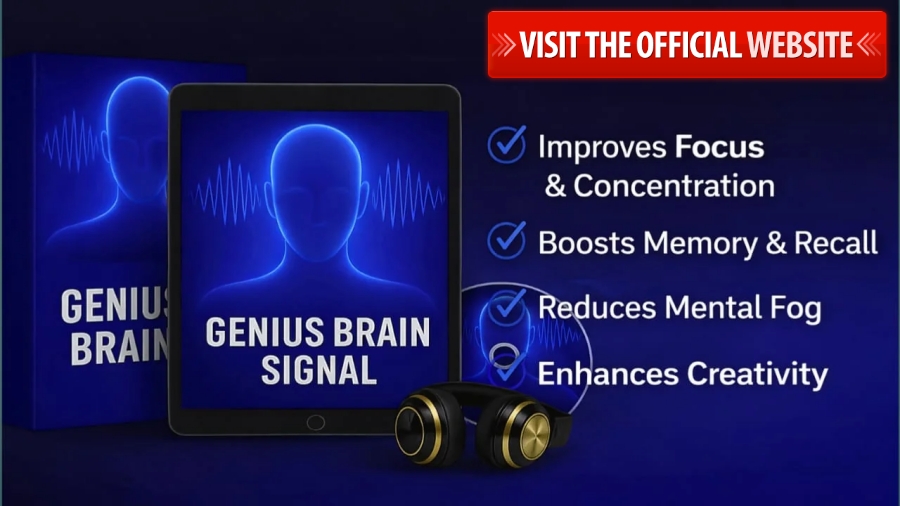
 BUY GENIUS BRAIN SIGNAL From OFFICIAL WEBSITE - SAVE 90% TODAY + INSTANT USA ACCESS!