

This is not a good site to see

robin hood

New member
Woke up this a.m turned on the tube and saw I of my accounts on fire, not a good feeling. This lady was famous for not keeping up with her cleanings. I cleaned 1 time, she said it had been about 10 years since she had it cleaned before. The only reason she had it cleaned was that she was just fined 10 grand for numerous offenses 1 being hood cleaning. She was 2 years over due for cleaning.I had recently run into her and she siad "I'm gunna call you my hood needs to be cleaned" My experience with itialian restaurants it that they is little grease, they dont deep fry much, mostly flower. Anyway I hope my ass is covered. Ant thoughts?

Greg
Robin hood


Fire Destroys Restaurant, Stores Across From Orange Park Mall

POSTED: 6:32 am EST December 8, 2005

ORANGE PARK, Fla. -- Fire destroyed a restaurant and two other businesses in an Orange Park strip mall overnight and damaged at least one other store.

Clay County Fire-Rescue received a call at 11:11 p.m. of a fire at 1871 Wells Road, across from Orange Park Mall. The first firefighters on the scene reported flames shooting from the building and called for back-up. Several more Clay County fire companies and two from Jacksonville Fire-Rescue helped battle the fire.

At the height of the fire, flames could be seen from Blanding Boulevard.

The fire was considered under control just over one hour later, but not before it destroyed Venezia's Italian Restaurant, Miracle Ear and Play Station Child Care and damaged Ladies Fitness.


Clay County Fire-Rescue Image
Firefighters said the fire was under control at 12:26 a.m., but not before two businesses were destroyed and at least one other was damaged.

The building was not occupied at the time and no one was injured in the fire. The state Fire Marshal's Office responded to the scene and was investigating what sparked the blaze.

"It appeared to have started in the initial, corner unit, which would be Venezia's Restaurant," Clay Fire Capt. Bernita Bush.

A damage estimate was not available early Thursday.

Sorry picture didnt post over they are blaming it on a grease fire!!!
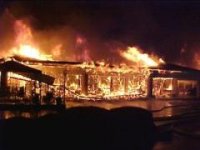
 

Attachments

  • 5490632_240X180.jpg
    5490632_240X180.jpg
    7.5 KB · Views: 74
You'll probably be getting a letter, certified, from the insurance company's attorney. There will be a site inspection, which will allow you to take photo's and speak with those who determone the cause.

Get your paper trail ready. If you don't have signed documents stating the deficiencies, and elimating your liability, it would be a good idea to contact your insurance provider. They will provide a loss specialist, and document the damage properly to prepare for a lawsuit.

The restaurant's insurance carrier will subrogate every contractor's insurance that they can involve.

I hope all goes well.
 
With her cleaning being 2 years over due do you think I will even here from them?
 
Before contacting your liability insurance company, have a copy of the invoice of the last service, along w/any service reports/notes or data sheets you may have made.

Don't talk to any one, w/o your attorny present.

With the last service 2 years ago, you are probably OK.

Now you see why we should all be using something like Phil's Service reports each time we clean.

Good luck

Douglas Hicks
General Fire Equipment Co of Eastern Oregon, Inc
 
It's a wonder more don't burn to ground. Not just for improper cleaning or the lack of having the hood systems cleaned but by how many restaurants are in need of SERIOUS electrical repairs! Fire and Exhaust systems that are non compliant, equipment thats never maintained or cleaned, improperly stored items, DANGEROUS hotwater heaters/boilers.
I see more electrical tape used on cords or broken grease laiden plugs then the average person will ever know.
Restaurant staff that don't think or even care, I once found a trash can on fire in a kitchen that a waitress had thrown a lit cigarette into, when I approached the manager about it; she just shook her head and said that it had happened before. In my opinion hood systems are blamed way more then the actual cause, the fire originated somewhere other then the hood.
I hope it all works out for you. Please keep us informed
 
Did you have any agreement on service frequency? Did you document refused attemps to make an appointment? Two years you will probably be contacted but eventually dropped from the suit based on the required quarterly service and that new clause in NFPA 96 about the restaurant being responsible.

Good luck
 
Grant,

If I remember correctly we have Phil Ackland to thank for his efforts to shift the burden of responsiblity to the store owners. Is this correct?

As a sideline insight we have seen appliances in which we are afraid to light the pilots. Neglect of maintenance over a long period of time can leave so much buildup that simply the act of lighting the pilots can lead to actual fire within the appliance itself. This has happened to us, and leads me to believe that this is a possible cause of a fire event after store is closed.

Richard
 
Phil is the one to thank for that.
Appliances can be evil. I have seen many fires that have started due to faulty thermostats on fryers.
 
I find it hard to believe the media an their twisted way of reporting is claiming that the fire started in the kitchen. I can see if a appliances is left on, deep frying chicken wings, the fans turned off and everbody leaves perhaps. You would think the fire supresssion system would have put it out! With all the appliances off, I would have to believe that it is a electrical issue in the kitchen perhaps. How do the fire inspectors see if the supression system tripped when the whole building burned down? With the heat the links had to have tripped at some point and the system dumped. If the fire was in the kitchen you would think it would have been put out. if it started else where and moved into the kitchen it would not have put out the fire. Am I wrong or right in this assumption? I to have seen so many fire hazards and am surprised that more do not burn down. I feel part of the problem is there is so many restaurants that most owners simply can not afford to do the necessary repairs. Its not the cash cow it used to be, stopped by last night to see the damage its unreal. Needless to say I am dropping all non-compliant customers this week. about 30 percent of my customer base its just not worth it. There are to many other places to clean without the hassell. Let the hungry newbies clean the fire traps. Any thoughts? Will keep ya'll posted I sure its gunna get interesting!
 
robin hood said:
Needless to say I am dropping all non-compliant customers this week. about 30 percent of my customer base its just not worth it.

That is a tough judgement call to make.

Everyone here has a database full of good regular customers that schedule regularly and most of us are very busy servicing these people.

Then there are "the others" (anyone here watch Lost??).

These people rarely schedule on time, don't pay promptly and you wonder why you are bothering with them at all.

30% is a big chunk......large companies can absorb this loss and keep on going.

For us small mom and pops it can be a challange.

Greg you are probably making a wise decision - but I am sure it'll hurt at first.
I know for us that would hurt.
 
Talk about media and the mis-information they put out! Years ago when I was a Volunteer Firefighter, we had a house fire. We made a successful stop and saved the house. Next morning as I was driving to work, the radio station claimed the house was a total loss, being burned to the foundation. What a joke, the house was cinder block construction. On another fire, I was talked to the insurance adjuster. He mentioned the response time was 20 minutes before the first truck arrived on scene. I asked where that information came from and he told me the homeowner. I told the adjuster that I was on the tailboard and made the hydrant. He asked how long it took to arrive. I pointed out the window of the car dealership where I worked and asked him he wanted to run 1 block to the station, then drive the truck 1/8mile to the house. I saw the same thing several times over my 25 years of fire and EMT service.

Of course one of the problems is the hero complex some of the emergency people have. We had on guy on the Baker Fire Department who would tell the Captain about a run. We would have to go to the run book to make sure we were on the same run at the same time.

We had a Captain who critiqued all of the other 2 Captains fires, even if was not at the fire or even town. The stories he came up were unbelibable.

After a few occasions like that, you tend not to believe anyof the stories unless you were in attendance and even then you questioned what really happend.

Now about fire investigation, I am not an expert, but it is really amazing how much a good investigator can find about origin, cause, time, and accelerants.
Unfortunatly, most investigators will not ask those of use in the business about building layouts, equipment condition, suppression system and hood maintence. The financial health of the business is also very important.

Here in Baker City we had the Chief investigate and determine the cause of a fire. The guy was good, he determined the cause froim his vacation in Hawaii. Never saw the fire scene, made no attempt to talk to the first in crew, the second in crew or any one else on scene.


Douglas Hicks
General Fire Equipment co of Eastern Oregon, Inc
 
I have seen two fires (and read reports on several others)that went something like this.
Restaurant closes for the night, leaving the deep fat fryers on low so that in the morning they can start up faster. The thermostat on the fryer fails and heats the oil to ignition temperature and a flash fire ensues. The (non UL300) fire system activates and extinguishes the fire. the faulty gas valve does not shut off the gas supply and the fryer continues to heat. Eventually the saponification layer breaks down on the fryer and flash fire number two erupts with no fire system to extinguish it. The restaraunt goes unchecked until a late night motorist or sleepless neighbor sees/smells/hears something unusual and calls the Fire Department. In one instance, after the FD finishes putting the wet stuff on the hot stuff, I go into what is left of the kitchen, appliances...melted, walls...construction timber exposed, plastic bags in the adjacent pantry melted, telephone on the chef's office wall... melted, ceiling... none! exhaust hood... discolored and slightly tweaked, duct and fan looked like nothing happened. Had the fan been left on or if the fire system would have activated the fan, the scenario would have been different, and most of the damage would have been contained to the duct and fan and then extended to the roof. The FD would have been notified earlier and then the fire would have been blamed on the cleaner.
 
Grant,

You just alarmed me. Almost always, unless the fans are timed out, we turn on the fans before we leave. This assures us that they work properly; dries out the system; and ensures a degree of safety in the event we missed the pilots or brushed against and turned on a burner knob, etc. I never thought about the aftermath of an unrelated fire event directing blame to the cleaning service. Do you instruct that fans should be left on?

Richard
 
Another thought comes to mind - usually we will leave the fryer(s) as we found it, i.e. - if pilot is lit and in 'on' position we restore to same. If 'off' and lit we leave same, etc. This discussion alerts me to the need to do something different - perhaps turn to 'off' position, blow the pilots, and let the cooks re-light and turn on? Is this what most do?

Richard
 
My policy is to leave the fan on, for the reasons mentioned.

Grant, do you think should the fan be wired to the micro-switch so the fan comes on during a fire? I have never even thought of this before. Should this be sent to NFPA 96 as a change in their model code? As you know, all of the systems manufactures have their suppression systems tested w/the fans on and off. Having the fan on would move the chemical through the duct work and move toxic gases and the heat out of the fire area.

Douglas Hicks
General Fire Equipment Co of Eastern Oregon, Inc
 
The premise of NFPA is to contain and control, and a duct system does that if the fan is operating. If the fan is off, there is no containment or control and nothing is drawn into the exhaust system, therefore most heat and fire extension will roll outside of the hood to the ceiling and walls. When an appliance fire is held in check by the operational exhaust system the fire damage is minimal and the damage is usually limited to the filters, the blower wheel in a utility set fan (or the whole fan if it is an aluminum upblast). The majority of the damage is caused by the supression crew ventilating and checking for extension by cutting a 20 foot in diameter hole in the roof, another hole in the ceiling and sometimes a back wall just to be sure.
As for a submission to NFPA, I haven't written a proposal in a few years, but you are right it may be time.
 
Here is an example of an upblast fan after a fire.
Totally Destroyed!!!!!!!!

Not our fire - but we were hired to clean up the mess.
 
Last edited:
Fans are cheap, a burnt fan means the rest of the place didn't burn. That is the design of it!
 
Now Grant, you know it is fun to crank up the rescue saw and cut holes in the roof. And as for pulling the ceiling, that is a hoot using the pike pole. Just remember to stand off to the side when making your pull.

Jon & I worked on a frozen sprinkler line today. The ceiling sheetrock was wet and a 4 x 8 fell to the floor while we were in the motel. I had forgotten the taste of wet blown in insulation. But I had not forgotten the itch of the insulation. Three frozen systems done, two more to go.

Douglas Hicks
General Fire Equipment Co of Eastern Oregon, Inc
 
Back
Top